Accident type · California
Commercial Truck Accidents
Collisions with tractor-trailers, box trucks and delivery vehicles. Higher stakes, more parties, more rules.
Updated . General information, not legal advice about your situation.
Legal review: Elham Azimy, California State Bar No. 207274 (law and claims only).
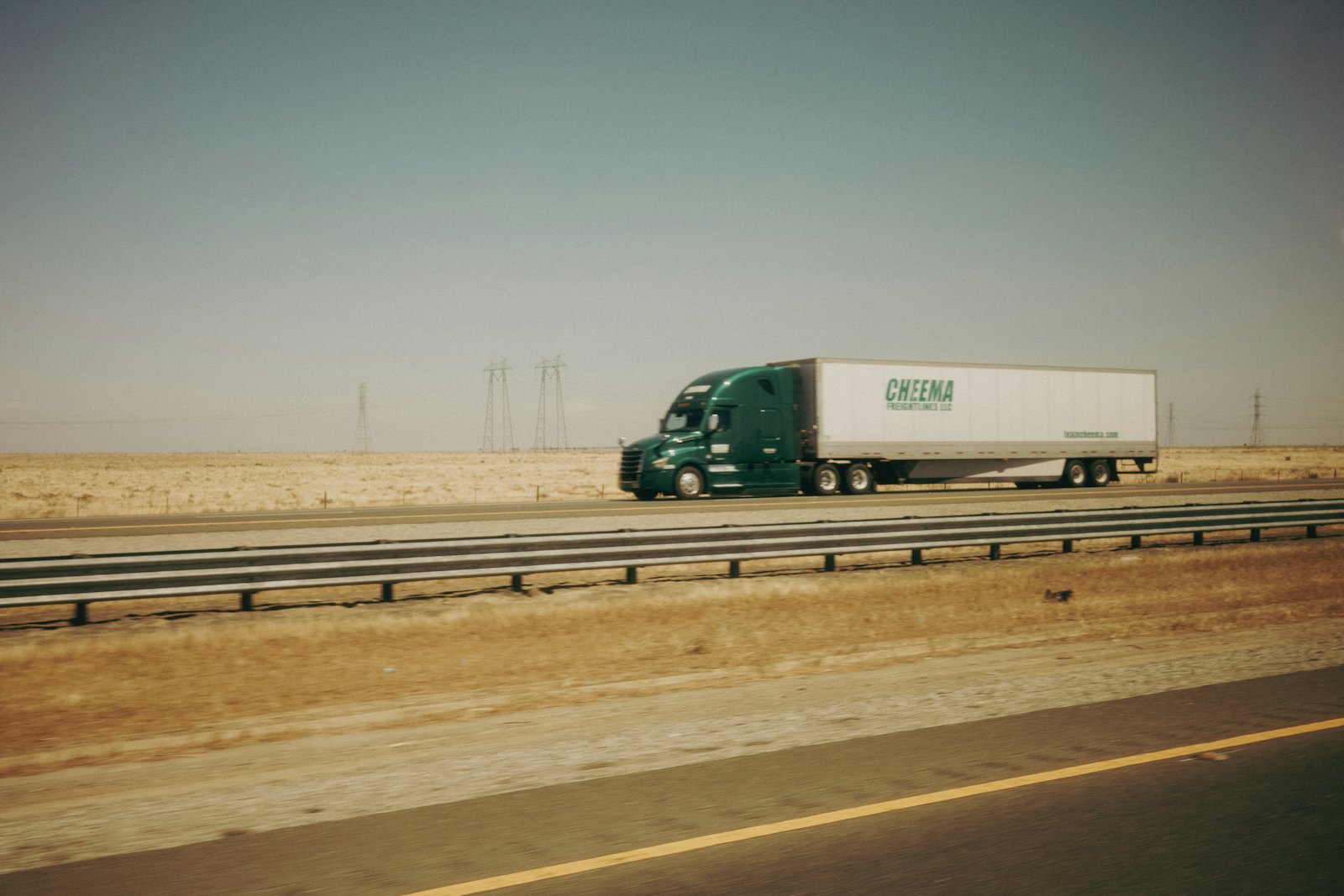
California moves more freight than any region in the country. Containers from the Ports of Los Angeles and Long Beach travel the I-710 to rail yards and the I-10, I-15, SR-60 and SR-91 to the Inland Empire, where Ontario, Fontana, Moreno Valley, Eastvale and Chino host hundreds of millions of square feet of warehouse space. Delivery vans and box trucks fill the last mile. When an 80,000-pound truck collides with a 4,000-pound car, the physics are one-sided, and the legal picture is more complex than a crash between two private drivers.
Who may be liable
- The driver, for negligent driving, fatigue, distraction or impairment.
- The motor carrier that employs or dispatches the driver, under respondeat superior and for its own negligence in hiring, training, supervision and maintenance. Under federal leasing rules, a carrier is generally responsible for an owner-operator driving under its authority.
- The owner of the tractor, trailer or chassis, when different from the carrier—common in port drayage, where chassis are pooled.
- Freight brokers and shippers, in limited circumstances involving negligent selection of an unsafe carrier or unsafe loading.
- Maintenance contractors and manufacturers, for brake, tire or coupling failures.
- Public entities, for dangerous road design, with a six-month claim deadline.
Federal and California rules that matter
Interstate carriers are regulated by the Federal Motor Carrier Safety Administration. Rules frequently relevant to a crash include hours-of-service limits (11 hours driving within a 14-hour window after 10 hours off, with electronic logging devices required), driver qualification and medical certification, drug and alcohol testing, pre-trip inspections and systematic maintenance, cargo securement and the prohibition on handheld phones. California applies parallel rules to intrastate carriers through the CHP’s Motor Carrier Safety program and requires biennial inspection of terminals. A violation that contributed to the crash is strong evidence of negligence.
Insurance
Federal rules require interstate carriers of general freight to carry at least $750,000 in liability coverage, with higher minimums for hazardous materials; many carriers carry $1 million or more, and large fleets carry excess layers. Port drayage carriers and small intrastate operators are often at the lower end. Multiple policies (carrier, trailer owner, broker contingent coverage) may apply to one crash.
Evidence that disappears quickly
Truck cases are won or lost on evidence that exists only briefly. Electronic logging device data, engine control module data, forward- and driver-facing camera footage, dispatch records, bills of lading, pre-trip inspection reports and the driver’s phone records are all subject to retention periods as short as a few months under federal rules, and carriers are not obligated to keep them longer unless asked. A written preservation (spoliation) letter to the carrier and its insurer should go out within days. The truck itself should be inspected before it is repaired or returned to service.
Common truck crash types
- Rear-end and underride: a truck striking slowed traffic, or a car sliding under a trailer. Underride guards are required at the rear but not the sides of most trailers.
- Lane-change and blind-spot sideswipes: see sideswipe accidents.
- Wide right turns at warehouse driveways and intersections that trap vehicles and cyclists on the right.
- Jackknife and rollover on grades such as the Cajon Pass and the Grapevine, in high winds near Palm Springs and on tight ramps.
- Lost loads and tire debris on the freeways.
- Delivery van collisions in residential areas and at curbs.
Injuries
Truck collisions produce a disproportionate share of catastrophic injuries, spinal cord injuries, traumatic brain injuries, multiple fractures and wrongful death. Long-term care costs and lost earning capacity often make up the largest part of damages.
California truck corridors
- Long Beach: the ports, I-710 and Terminal Island.
- Ontario: the I-10/I-15 junction and airport logistics.
- Fontana: warehouse driveways and I-10.
- Moreno Valley: SR-60 and the eastern warehouse district.
- Pomona and the 57/60 merge; Victorville and the Cajon Pass.
Local guides
City-specific pages for commercial truck accidents in California.
Common questions
The trucking company’s insurer called me the day after the crash. Should I talk to them?
Carriers deploy rapid-response teams and adjusters quickly because they know early statements matter. You are not required to give a recorded statement to the other side’s insurer. Many people choose to limit contact until they understand their injuries.
The truck driver was an independent contractor. Does that let the company off the hook?
Usually not. Federal regulations make a carrier responsible for vehicles operated under its authority regardless of the driver’s employment label, and California law independently scrutinizes contractor classifications.
How do I find out who the carrier is?
The USDOT number and carrier name are required on the cab door. FMCSA’s public SAFER system shows the carrier’s registration, insurance on file and safety record. The police report should also list the carrier.
The truck was a delivery van (Amazon, FedEx, UPS). Is that handled the same way?
Similar principles apply, with wrinkles: many delivery vans are operated by contracted “delivery service partners” rather than the brand on the van, and coverage may sit with the contractor, the brand or both. Identify the actual operator from the vehicle registration and the driver’s employer.
Describe what happened. Attorney Elham Azimy reviews every inquiry personally and, if we can help, calls you to talk it through. Free evaluation; no fee unless we recover for you.
Sources and official resources
- FMCSA — hours-of-service regulations
- California Highway Patrol — find an office
- Government Code § 911.2 (six-month claim deadline against public entities)
Links go to official government, court and public-health sources. Laws change; verify current text before relying on it.