Accident type · California
Multi-Vehicle and Chain-Reaction Collisions
Three or more vehicles, one event. Fault is divided, and insurance limits are often stretched.
Updated . General information, not legal advice about your situation.
Legal review: Elham Azimy, California State Bar No. 207274 (law and claims only).
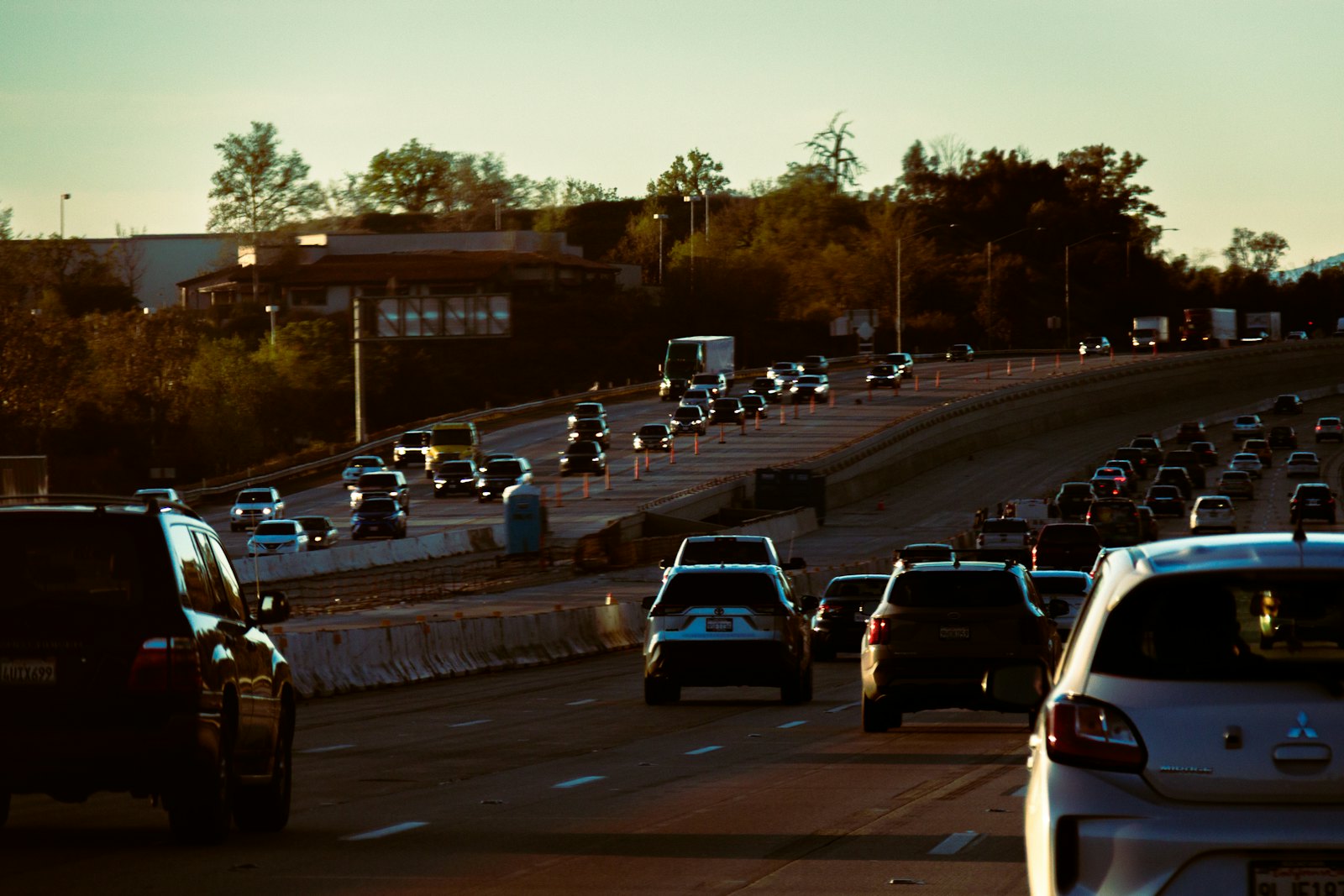
Chain-reaction collisions are a routine product of California congestion: one driver fails to stop, and the impact cascades through the vehicles ahead. Larger pile-ups happen in fog on the I-5 through the Grapevine, in sandstorms near Palm Springs, in sudden rain on the 91 and in the Cajon Pass. However they begin, they share two features—fault is spread among several drivers, and the available insurance is often less than the total injuries.
How fault is apportioned among several drivers
California’s pure comparative negligence rule assigns each party a percentage of fault, and each injured person’s recovery is reduced by their own percentage. In a four-car chain collision, the investigation asks of each driver: did you strike the vehicle ahead before you were struck from behind, or were you pushed into it? A driver who was stopped and pushed forward bears no fault for the forward impact; a driver who struck the car ahead on their own and was then hit again shares fault for the first impact.
For economic damages such as medical bills and lost wages, California applies joint and several liability: any at-fault defendant can be required to pay the full amount, subject to contribution among them. For non-economic damages such as pain and suffering, Civil Code § 1431.2 (Proposition 51) limits each defendant to their own percentage. This distinction matters when one at-fault driver is uninsured.
Evidence that establishes the sequence
- Damage patterns on each vehicle (front, rear or both), including the height and shape of impacts.
- Event data recorders, which log speed, braking and impact timing in most modern vehicles.
- Dashcam footage from any vehicle involved or nearby.
- Witness accounts, especially from occupants of vehicles that were not struck.
- CHP or police diagrams showing rest positions and debris.
- Truck electronic logs and cameras when a commercial vehicle is involved.
When the insurance is not enough
An at-fault driver’s policy has a per-person limit and a per-accident limit. California’s minimum since 2025 is $30,000 per person and $60,000 per accident; if that driver injured five people, the $60,000 is shared among all of them. Insurers in multi-claimant situations may file an interpleader or negotiate a pro-rata division. Your own underinsured motorist coverage can fill the gap, and additional at-fault drivers’ policies may also be available.
Common multi-vehicle scenarios in California
- Stop-and-go chain collisions on the 405, 91, 5 and 60.
- Interchange crashes at the Orange Crush, the 57/60 merge and the 10/15 junction.
- Weather pile-ups in the Cajon Pass, the Grapevine and the Coachella Valley.
- Secondary collisions behind an earlier crash.
- Intersection crashes where a struck vehicle is pushed into a third.
Injuries
Multiple impacts mean multiple injury mechanisms. Occupants may experience the rapid acceleration of a rear impact followed by the deceleration of a frontal one. Neck and back injuries, concussions, fractures and, in high-speed pile-ups, catastrophic injuries are typical.
Common questions
I was in the middle of a three-car crash and hit the car in front after being pushed. Am I at fault?
If you were stopped or had stopped safely and the rear impact pushed you forward, you are generally not at fault for the forward impact. If you struck the front car before being hit, you share fault for that impact. The evidence of sequence decides it.
Several of us were hurt and the at-fault driver has minimum insurance. What happens?
The per-accident limit is shared among all claimants, often pro rata by injury severity. Your own underinsured motorist coverage, other at-fault drivers’ policies and the at-fault driver’s personal assets are the remaining sources.
How long do multi-vehicle claims take?
Longer than two-car claims. Insurers wait for the police report and often for each other, and disputes over sequence and apportionment are common. Preserve your own evidence early so delays do not cost you.
Describe what happened. Attorney Elham Azimy reviews every inquiry personally and, if we can help, calls you to talk it through. Free evaluation; no fee unless we recover for you.
Sources and official resources
- Vehicle Code § 16056 (minimum liability insurance limits)
- Insurance Code § 11580.2 (uninsured and underinsured motorist coverage)
- Vehicle Code § 21703 (following too closely)
Links go to official government, court and public-health sources. Laws change; verify current text before relying on it.