Accident type · California
Rear-End Collisions: What Happens After You Are Hit From Behind
The most common California crash. Fault usually—but not always—rests with the rear driver.
Updated . General information, not legal advice about your situation.
Legal review: Elham Azimy, California State Bar No. 207274 (law and claims only).
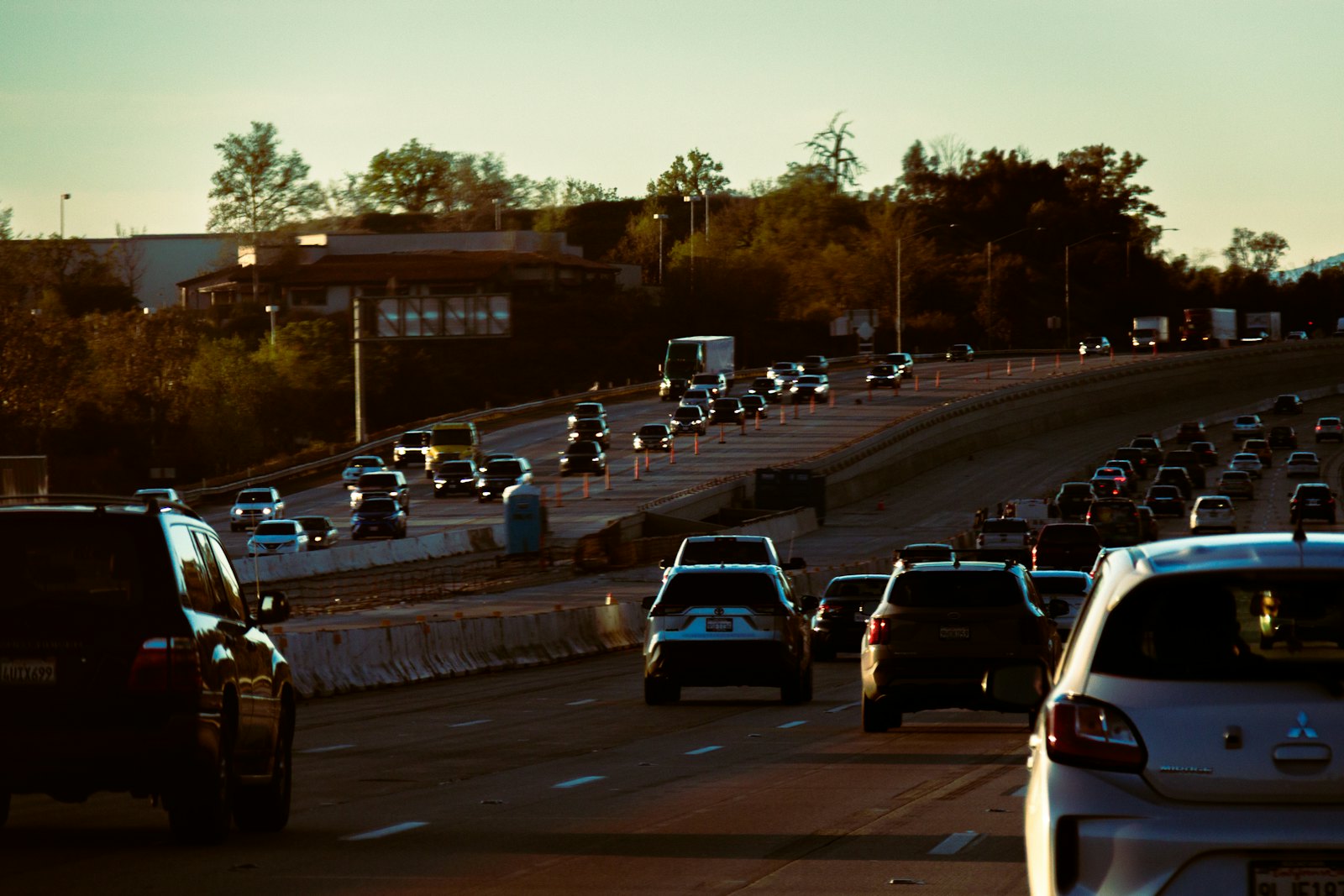
Rear-end collisions are the most frequently reported crash type on California freeways and arterials. They happen in stop-and-go traffic on the 405, 91 and 5, at the first signals after a freeway ends, and at driveways where a lead vehicle slows to turn. Most are survivable, but they are also the leading source of neck and back injury claims, and insurers scrutinize them closely.
Who is at fault in a rear-end collision?
California has no rule that the rear driver is automatically at fault, but the practical starting point is close to it. Vehicle Code § 21703 prohibits following more closely than is reasonable and prudent for the speed, traffic and road conditions, and the basic speed law (§ 22350) requires a speed that allows a driver to stop for foreseeable hazards. A driver who strikes a vehicle ahead almost always violated one or both.
The lead driver can share fault in limited situations: brake lights that did not work, a sudden and unnecessary stop in a travel lane, reversing, or cutting in and braking (a “brake check”). Under California’s pure comparative negligence rule, the lead driver’s recovery is reduced by their percentage of fault rather than eliminated. See our fault rules guide.
Chain-reaction rear-end crashes
When three or more vehicles collide in sequence, fault depends on the order of impacts. If the last vehicle pushed the middle vehicle into the first, the last driver may be responsible for all of the damage. If the middle driver struck the first vehicle before being hit, the middle driver shares fault for that first impact. Damage patterns, event data recorders and witness accounts resolve the sequence. See multi-vehicle accidents.
Why low-speed rear-end impacts still cause injury
Insurers frequently argue that a collision with little visible bumper damage could not have hurt anyone. That argument conflates vehicle damage with occupant forces. Modern bumpers are designed to absorb low-speed impacts without deforming, while the occupant’s head and neck still undergo rapid acceleration. Delayed-onset neck, shoulder and back pain within 24–72 hours is commonly reported after rear-end crashes, and it is the typical presentation of whiplash-associated disorder. Our guide to low-speed collision claims covers this in detail.
Injuries commonly associated with rear-end collisions
- Neck injuries and whiplash from the rapid back-and-forth motion of the head.
- Back injuries and herniated discs, especially in the lower back and neck.
- Concussions when the head strikes the headrest, window or steering wheel, or from acceleration alone.
- Shoulder and knee injuries from bracing against the wheel or dashboard.
- Wrist and hand injuries from gripping the steering wheel at impact.
What to do after being rear-ended
- Move to safety and call 911 if anyone is hurt or vehicles are blocking traffic.
On a freeway, pull to the right shoulder if the vehicle is drivable; CHP will respond. On city streets the local police department handles the report.
- Exchange information and photograph both vehicles, the lane and any skid marks.
Photograph the other driver’s license, insurance card and plate. Note whether their brake lights worked.
- Report the collision.
If anyone was injured or damage exceeded $1,000, each driver must file an SR-1 with the DMV within 10 days (Vehicle Code § 16000). Notify your own insurer promptly regardless of fault.
- Get evaluated even if you feel fine.
Adrenaline masks symptoms. A same-week evaluation documents injuries close in time to the crash.
- Be careful with recorded statements.
You must cooperate with your own insurer, but you are not required to give the other driver’s insurer a recorded statement.
Deadlines that apply
A lawsuit against a private driver generally must be filed within two years of the collision (Code of Civil Procedure § 335.1). If a government vehicle (city truck, bus, police car) rear-ended you, a government claim must be presented within six months (Government Code § 911.2). Insurance claims should begin immediately. See claim deadlines.
Where rear-end crashes concentrate in California
Any congested freeway segment produces them, but a few corridors stand out: the SR-91 through Corona and the Santa Ana Canyon, I-5 through the Anaheim Resort district, the I-405 through Irvine and the Sepulveda Pass, and the first signals after freeways end, such as the SR-55 into Newport Boulevard.
Local guides
City-specific pages for rear-end collisions: what happens after you are hit from behind in California.
Common questions
The other driver admitted fault at the scene but their insurer is now disputing it. What happens?
Scene admissions are useful but not binding on an insurer. The police report, photographs, damage patterns and witnesses carry the weight. Statements the driver made to you can still be used as evidence of fault.
I was stopped at a red light and pushed into the car ahead. Am I responsible for that car’s damage?
Usually not. If you were stopped and the impact from behind pushed you forward, the rear driver is typically responsible for both collisions. Make sure the report records that you were stationary.
How long do I have to see a doctor after a rear-end crash?
There is no legal deadline, but gaps between the crash and first treatment are used by insurers to argue the injury was unrelated or minor. Being seen within a few days is the practical standard.
Does my own insurance pay for anything if the other driver was at fault?
Medical payments (MedPay) coverage, if you have it, pays medical bills regardless of fault. Collision coverage repairs your car (your insurer then recovers from the at-fault insurer). Uninsured/underinsured motorist coverage applies if the rear driver had no or too little insurance.
Describe what happened. Attorney Elham Azimy reviews every inquiry personally and, if we can help, calls you to talk it through. Free evaluation; no fee unless we recover for you.
Sources and official resources
- Vehicle Code § 21703 (following too closely)
- Vehicle Code § 22350 (basic speed law)
- Vehicle Code § 16000 (SR-1 report to DMV within 10 days)
- Code of Civil Procedure § 335.1 (two-year limit for injury claims)
- Government Code § 911.2 (six-month claim deadline against public entities)
Links go to official government, court and public-health sources. Laws change; verify current text before relying on it.