Accident type · California
Distracted Driving Accidents
Crashes caused by phones, infotainment screens and inattention. Proof is the challenge.
Updated . General information, not legal advice about your situation.
Legal review: Elham Azimy, California State Bar No. 207274 (law and claims only).
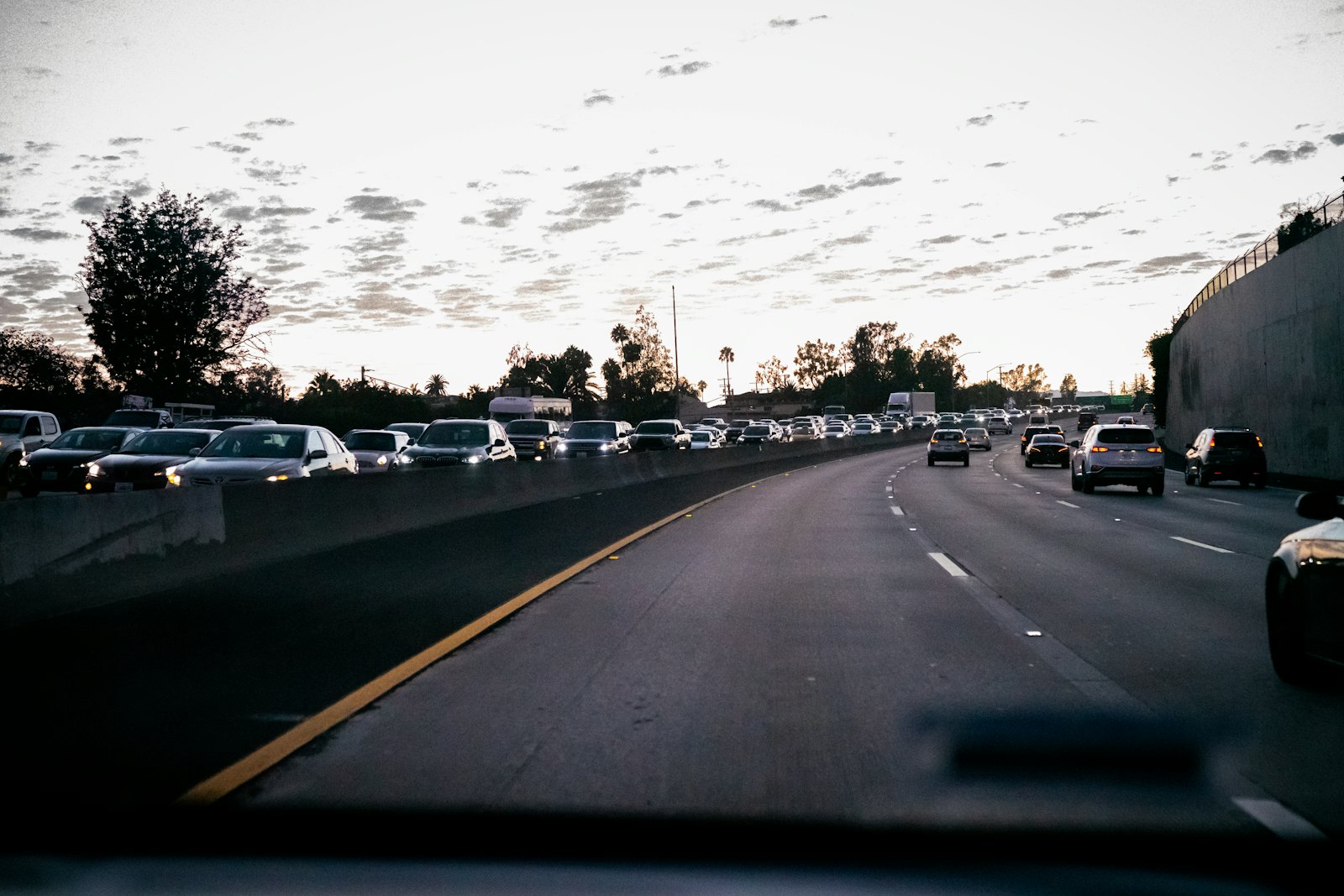
Distraction is implicated in a large share of rear-end, lane-departure and intersection collisions, but it is rarely admitted and often absent from police reports. California’s Office of Traffic Safety has repeatedly identified cell phone use as among the most common distractions observed in roadside surveys. For an injured person, distraction matters in two ways: it establishes negligence, and in egregious cases it can support a finding of recklessness.
California’s distracted driving laws
- Handheld phone use: Vehicle Code § 23123.5 prohibits holding and operating a phone while driving; a phone may be used only in a hands-free mode mounted on the dash or windshield, with a single swipe or tap. Drivers under 18 may not use a phone at all, even hands-free (§ 23124).
- Texting: writing, sending or reading text-based communications while driving is prohibited under § 23123.5.
- Repeat violations: since 2021, a second violation within 36 months adds a point to the driver’s record.
- General inattention: eating, grooming, reaching for objects and infotainment use are not separately prohibited but are negligence when they cause a driver to fail to see what is plainly visible.
How distraction is proved
- Scene observations.
No braking before impact (no skid marks, no event data recorder braking signal) is characteristic of a driver who never saw the hazard.
- Witness statements.
Other drivers and passengers frequently observe a driver looking down or holding a phone.
- Phone records.
Carrier records showing calls and texts at the time of the crash can be obtained through subpoena in litigation. App usage data requires the device itself or a court order.
- Vehicle data.
Infotainment systems log Bluetooth connections, screen interactions and sometimes text messages. Event data recorders capture speed, throttle and braking in the seconds before impact.
- Admissions.
Drivers sometimes admit at the scene that they “looked down for a second.” Record what was said.
- The police report.
Officers can note “inattention” as an associated factor; ask whether it was recorded.
Typical distracted-driving crash patterns
- Rear-end collisions with no pre-impact braking in stopped or slow traffic.
- Drifting out of a lane into a sideswipe or off the road.
- Running a red light or stop sign into a T-bone collision.
- Striking a pedestrian or cyclist the driver should have seen.
- Crossing the centerline into a head-on collision.
Does distraction increase what you can recover?
Compensatory damages depend on your injuries, not on how badly the other driver behaved. Distraction can matter in three ways: it defeats the driver’s attempts to blame you, it can support punitive damages when the conduct rises to conscious disregard (texting at highway speed in heavy traffic, for example), and it tends to produce higher-speed impacts because the driver never braked, which increases injury severity.
Commercial drivers
Federal rules prohibit commercial drivers from texting or using handheld phones (49 CFR 392.80 and 392.82). Trucking and delivery companies often have telematics and camera systems that record phone use. Rideshare drivers interacting with the app are a recurring distraction scenario; see rideshare accidents.
Common questions
I am sure the driver was texting but there is no proof. Is it worth pursuing?
Yes. You do not need to prove distraction to recover; you need to prove the driver was negligent, and failing to stop for stopped traffic or running a signal is negligence on its own. Distraction evidence strengthens the claim but is not required.
Can I get the other driver’s phone records myself?
Not directly. Carriers release records only to the account holder or under subpoena. Records are typically obtained once a lawsuit is filed, which is one reason some distracted-driving claims proceed to litigation.
What if I was also using my phone?
Your own distraction can be assigned a percentage of fault under comparative negligence, reducing your recovery. Be truthful; your own records can be subpoenaed too.
Describe what happened. Attorney Elham Azimy reviews every inquiry personally and, if we can help, calls you to talk it through. Free evaluation; no fee unless we recover for you.
Sources and official resources
- Vehicle Code § 23123.5 (handheld device use while driving)
- NHTSA — distracted driving
- California Office of Traffic Safety
- Civil Code § 3294 (punitive damages)
Links go to official government, court and public-health sources. Laws change; verify current text before relying on it.