Accident type · California
Pedestrian Accidents
People on foot struck by vehicles. California law protects pedestrians, but fault can be shared.
Updated . General information, not legal advice about your situation.
Legal review: Elham Azimy, California State Bar No. 207274 (law and claims only).
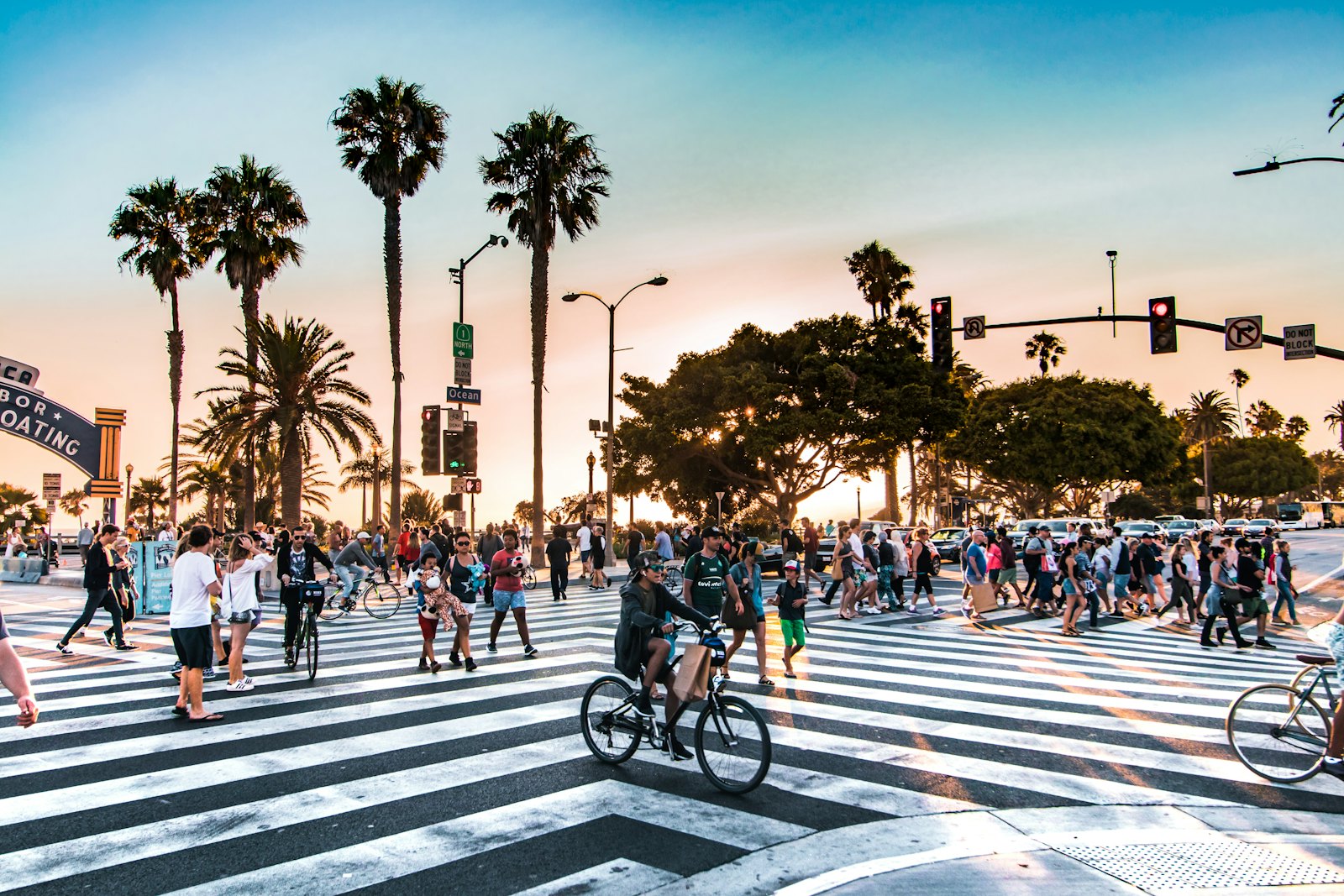
Pedestrian deaths in California have risen over the past decade, and California’s wide, fast arterials are where most serious pedestrian collisions happen: Western and Vermont in Los Angeles, First Street in Santa Ana, El Cajon Boulevard in San Diego, Beach Boulevard through Orange County, Waterman Avenue in San Bernardino. Most involve a pedestrian crossing a multi-lane road at night, outside a signalized crosswalk, struck by a driver who did not slow. Cities from Los Angeles to San Diego have adopted Vision Zero programs in response.
Pedestrian rights and duties under California law
- Crosswalks: drivers must yield to pedestrians in a marked crosswalk or in an unmarked crosswalk at an intersection (Vehicle Code § 21950). Every intersection has an unmarked crosswalk across each leg unless signs say otherwise.
- Pedestrian duty of care: a pedestrian may not suddenly leave the curb into the path of a vehicle that is an immediate hazard (§ 21950(b)), and pedestrians outside crosswalks must yield to vehicles (§ 21954(a)).
- Driver duty everywhere: even when a pedestrian is outside a crosswalk, the driver must exercise due care for their safety (§ 21954(b)). Jaywalking does not give drivers a license to hit people.
- Freedom to Walk Act (AB 2147, 2023): police may no longer cite pedestrians for crossing outside a crosswalk unless there is an immediate danger of collision. This changes enforcement, not the civil fault analysis.
- Signals: pedestrians must obey walk signals (§ 21456); drivers turning on green must yield to pedestrians lawfully in the crosswalk (§ 21451).
How fault is shared
Pedestrian collisions are frequently apportioned. A pedestrian crossing mid-block at night in dark clothing may be assigned a significant percentage of fault; a driver who was speeding, distracted or impaired is assigned the rest. Under pure comparative negligence, a pedestrian found 40% at fault still recovers 60% of their damages. The evidence that matters: lighting, the driver’s speed (from event data recorders and physical evidence), sightlines, the pedestrian’s position and the driver’s attention.
What insurance covers an injured pedestrian
- The driver’s liability coverage, which is the primary source.
- Your own auto policy’s uninsured/underinsured motorist coverage, which applies even though you were on foot, and medical payments coverage.
- A resident relative’s auto policy UM coverage if you have none.
- Health insurance, subject to reimbursement from a recovery.
- For hit-and-run, your UM coverage, with prompt police reporting. See hit-and-run accidents.
Children, seniors and people with disabilities
Children are held to the standard of a reasonable child of the same age, not an adult, and very young children cannot be negligent at all. Drivers must exercise extra caution near schools, parks and bus stops. Seniors are the largest group of pedestrian fatalities in many California cities; slower crossing speeds and signal timing are recurring issues. Drivers must yield to blind pedestrians carrying a white cane or using a guide dog (§ 21963).
Injuries
Pedestrians absorb the full force of a vehicle with no protection. Typical injuries include fractures of the legs and pelvis from bumper contact, traumatic brain injuries from the hood, windshield or ground, spinal cord injuries, internal injuries and, at speeds above 30 mph, a high likelihood of catastrophic injury or death.
Dangerous roadway claims
Where a crossing lacked adequate lighting, had obstructed sightlines or had a history of pedestrian collisions the city knew about, a claim against the city or Caltrans for a dangerous condition of public property may exist alongside the driver claim. It requires a government claim within six months and expert evidence, and the city will argue the driver and pedestrian were the cause. Vision Zero documents identifying a corridor as high-injury are relevant to notice.
Cities with concentrated pedestrian collisions
- Los Angeles: the High-Injury Network.
- Santa Ana: Safe Mobility Santa Ana corridors.
- Glendale and Santa Monica.
- San Diego and El Cajon.
Local guides
City-specific pages for pedestrian accidents in California.
Common questions
I was crossing outside a crosswalk. Do I have any claim?
Often yes. Drivers owe due care to pedestrians everywhere on the road. Your fault percentage may reduce your recovery, but it does not eliminate it unless you were the sole cause.
The driver says I “came out of nowhere.” How is that evaluated?
Reconstruction asks how long you were visible before impact and whether an attentive driver at a lawful speed could have stopped or avoided you. Event data recorders, lighting conditions and the geometry of the road answer it.
I do not own a car. What insurance covers me?
The driver’s liability policy. If you live with a relative who has auto insurance, their UM coverage may extend to you. Health insurance covers treatment, subject to reimbursement.
How long do I have?
Two years against the driver; six months to present a government claim if a city or state road condition contributed.
Describe what happened. Attorney Elham Azimy reviews every inquiry personally and, if we can help, calls you to talk it through. Free evaluation; no fee unless we recover for you.
Sources and official resources
- Vehicle Code § 21950 (duty to yield to pedestrians in crosswalks)
- NHTSA — pedestrian safety
- Vision Zero Los Angeles (LADOT Livable Streets)
- Government Code § 911.2 (six-month claim deadline against public entities)
Links go to official government, court and public-health sources. Laws change; verify current text before relying on it.