Accident type · California
Sideswipe and Unsafe Lane-Change Collisions
Two vehicles traveling the same direction make side contact, usually during a lane change or merge.
Updated . General information, not legal advice about your situation.
Legal review: Elham Azimy, California State Bar No. 207274 (law and claims only).
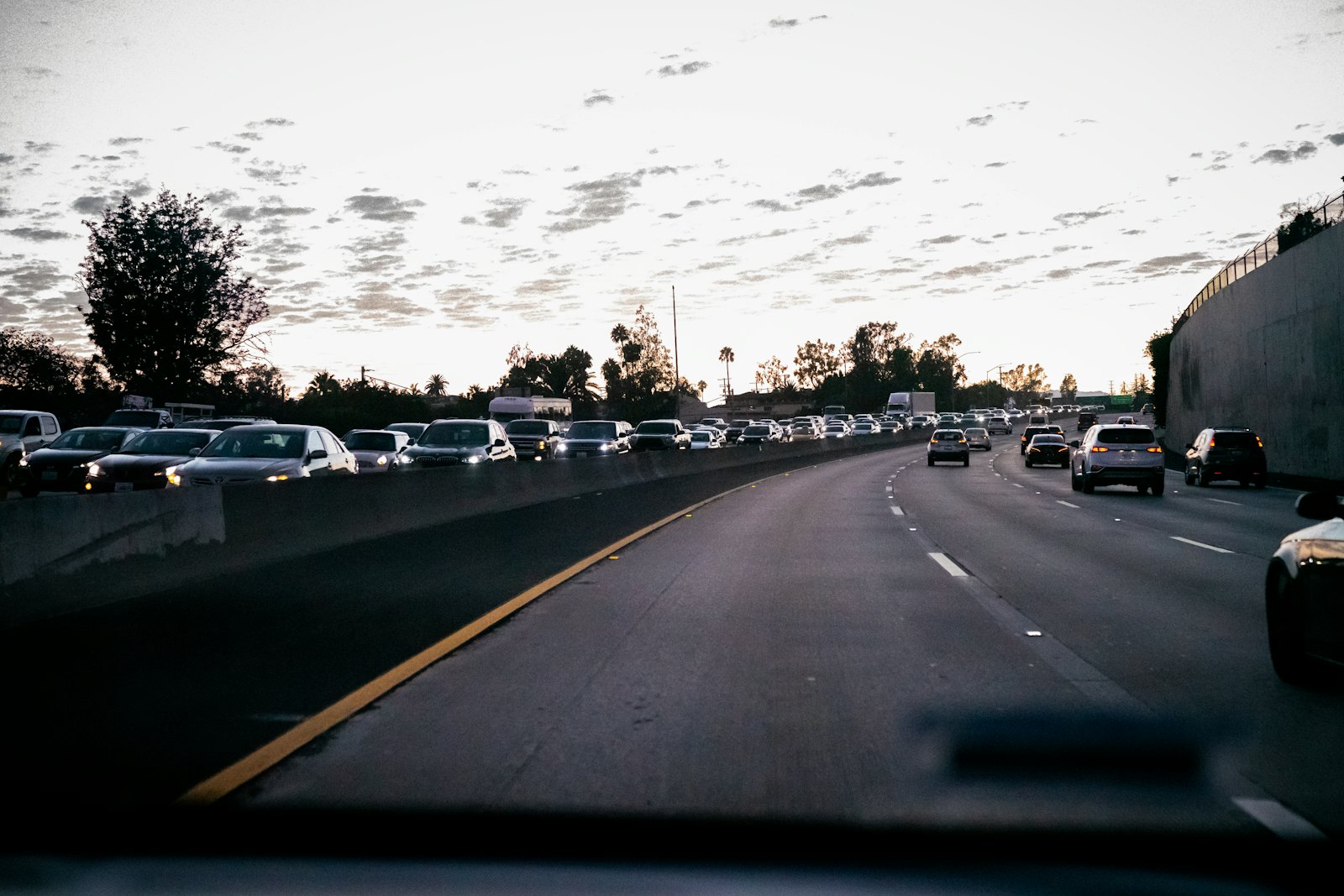
Sideswipe collisions happen when two vehicles traveling in the same direction make side-to-side contact. On California freeways they cluster at interchanges with heavy weaving—the Orange Crush, the 405/55/73 junction in Costa Mesa, the 57/60 merge in Pomona, the 15/215 split in Murrieta—and at express-lane entries where speed differentials between lanes are large. Many are minor; some send a vehicle into a barrier or across lanes with severe results.
The lane-change rule
Vehicle Code § 21658(a) requires a driver to stay within a single lane and to move from it only when the movement can be made with reasonable safety. § 22107 requires a signal before turning or changing lanes when another vehicle may be affected. The driver who left their lane is presumptively at fault; the dispute is usually about which driver that was.
Simultaneous lane changes into the same lane—both drivers moving toward a middle lane—are a common scenario where fault is shared. Merges onto the freeway are governed by the same rule: the merging driver must yield to traffic already in the lane, but drivers in the lane may not accelerate to block a merge.
Proving who moved
- Damage location and direction. Scrapes that begin at the front of one vehicle and run rearward, versus the opposite on the other, show the relative motion.
- Paint transfer and tire marks. Lateral tire marks show which vehicle was moving sideways.
- Dashcam and telematics. Many vehicles record lane-departure and steering data; dashcams from either vehicle or third parties are decisive when available.
- Independent witnesses. Drivers behind the collision often saw the lane change clearly.
- Lane-assist alerts. Some modern vehicles log blind-spot and lane-departure warnings.
Motorcycles and lane splitting
California is the only state that expressly permits lane splitting (Vehicle Code § 21658.1), and many sideswipe claims involve a motorcyclist between lanes. A driver who changes lanes into a lane-splitting rider without checking can be at fault; a rider traveling far faster than surrounding traffic may share it. CHP’s lane-splitting safety tips, though not law, are often cited by adjusters. See motorcycle accidents.
Trucks and the “no-zone”
Large trucks have blind spots along both sides that can hide an entire car. A truck drifting into a passenger vehicle during a lane change is a frequent cause of serious sideswipe collisions on the 710, 10, 15 and 60. Federal rules require mirrors and safe lane changes; a truck driver’s failure to check is negligence regardless of the blind spot. See truck accidents.
Injuries in sideswipe collisions
Minor contact causes little injury; the serious cases involve loss of control. A sideswipe that pushes a vehicle into a barrier, off the road or into other lanes produces secondary impacts with their own injury patterns: neck and back injuries, shoulder injuries from bracing, fractures and head injuries.
Hit-and-run sideswipes
Because sideswipes often feel minor, the other driver sometimes keeps going. Leaving the scene of a collision with property damage is a misdemeanor (Vehicle Code § 20002) and a felony if someone is injured (§ 20001). Get the plate if you can and report immediately; your uninsured motorist coverage typically covers hit-and-run injuries. See hit-and-run accidents.
Common questions
We both changed lanes at the same time. Who pays?
Fault is typically shared, often equally, unless evidence shows one driver began the movement first or failed to signal. Each driver’s recovery is reduced by their share of fault.
A car merged into me from an on-ramp. Isn’t merging traffic always at fault?
The merging driver must yield, so they are usually primarily responsible, but a driver in the lane who sped up to close a gap or was in the lane illegally (for example, crossing a solid line) can share fault.
The damage is minor but my neck hurts. Is it worth a claim?
Injury claims are about the injury, not the size of the dent. Get evaluated and document your symptoms. Many sideswipe claims are modest; some involve real injuries that deserve compensation.
Describe what happened. Attorney Elham Azimy reviews every inquiry personally and, if we can help, calls you to talk it through. Free evaluation; no fee unless we recover for you.
Sources and official resources
- Vehicle Code § 21658 (lane changes only when safe)
- Vehicle Code § 21658.1 (motorcycle lane splitting)
- Vehicle Code § 20002 (hit-and-run involving property damage)
- Vehicle Code § 20001 (hit-and-run involving injury or death)
Links go to official government, court and public-health sources. Laws change; verify current text before relying on it.