Accident type · California
Motorcycle Accidents
Riders face severe injuries and skeptical adjusters. California’s rules are rider-friendly in important ways.
Updated . General information, not legal advice about your situation.
Legal review: Elham Azimy, California State Bar No. 207274 (law and claims only).
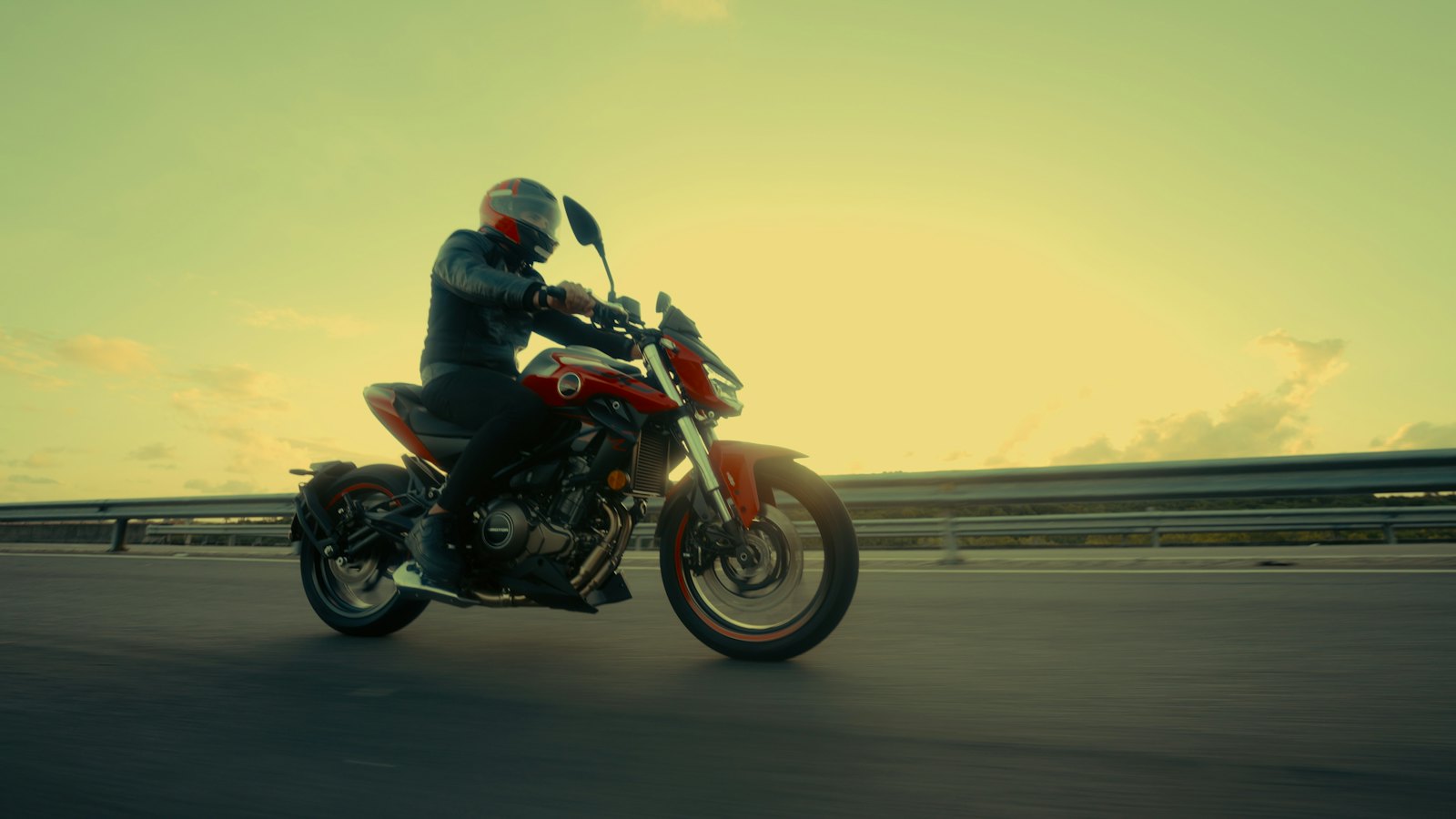
California’s year-round riding weather, long freeway commutes and canyon roads—Ortega Highway, Angeles Crest, Palomar Mountain, Glendora Mountain Road, the PCH through Malibu—make it one of the largest motorcycle markets in the country. Riders are also vastly overrepresented among the seriously injured. A motorcyclist has no crumple zone; the most common serious collision is a car turning left across the rider’s path, and the most common dispute afterward is whether the rider was going too fast or splitting lanes unsafely.
Lane splitting is legal in California
California is the only state that expressly authorizes riding between lanes of stopped or moving traffic. Vehicle Code § 21658.1 defines lane splitting and directs the CHP to publish safety guidelines, which it has done. The guidelines are not law and do not set a speed limit for splitting, but adjusters and juries use them as a reference for reasonable conduct: splitting at modest speed differentials in the leftmost lanes is viewed as safer than high-speed splitting on the right. A driver who changes lanes into a splitting rider without checking is negligent; a rider who split at excessive speed may share fault.
The left-turn crash
The signature motorcycle collision is a vehicle turning left across the rider’s lane at an intersection or driveway, often with the driver saying “I never saw him.” Vehicle Code § 21801 requires a left-turning driver to yield to oncoming traffic close enough to be a hazard, and inattention does not excuse failing to see a visible motorcycle. These crashes produce the most severe injuries because the rider strikes the vehicle’s side or is ejected. See T-bone and left-turn collisions.
Countering anti-rider bias
Insurers and some jurors assume riders are reckless. The counter is evidence: a helmet and protective gear, a valid M1 endorsement, a clean riding record, event data from the other vehicle, witness statements and physical evidence showing the rider’s speed and position. Conspicuity evidence (headlight on, high-visibility gear) addresses the “I didn’t see him” defense directly.
Helmets and comparative fault
California requires all riders and passengers to wear a DOT-compliant helmet (Vehicle Code § 27803). A rider injured without a helmet can still recover, but the at-fault driver may argue that the lack of a helmet contributed to head injuries, reducing damages for those injuries under comparative negligence. The argument does not apply to injuries a helmet would not have prevented, such as leg and spinal injuries.
Insurance issues specific to riders
Motorcycle liability policies often carry lower limits and may lack uninsured/underinsured motorist coverage unless specifically purchased. Because rider injuries routinely exceed a driver’s minimum limits, UM/UIM coverage on the motorcycle policy—or on another vehicle in the household, depending on policy language—is critical. Medical payments coverage is also worth checking.
Common injuries
- Fractures of the legs, pelvis, arms and collarbone, often multiple and requiring surgery.
- Traumatic brain injuries even with a helmet.
- Spinal cord injuries.
- Road rash requiring grafting, and degloving injuries.
- Shoulder and knee injuries from impact and ejection.
- Internal injuries and wrongful death.
Where rider crashes concentrate in California
- Riverside and the 91/60/215 corridors.
- San Diego: the 5, 8 and 15 and the East County mountain roads.
- Oceanside: I-5, SR-76 and Camp Pendleton riders.
- The Ortega Highway from San Juan Capistrano to Lake Elsinore, and PCH through Newport Beach and Malibu.
Local guides
City-specific pages for motorcycle accidents in California.
Common questions
A car merged into me while I was lane splitting. The insurer says splitting means I assumed the risk. Is that right?
No. Lane splitting is lawful, and drivers must check before changing lanes regardless. The question is whether each party acted reasonably; splitting at a safe speed differential does not make you at fault for a driver’s unsafe lane change.
I was not wearing a helmet. Can I still make a claim?
Yes. The helmet issue may reduce damages for head injuries but has no effect on other injuries or on the other driver’s fault for causing the crash.
The driver says he never saw me. Is that a defense?
It is usually an admission. Drivers must keep a proper lookout; failing to see a visible motorcycle is negligence, not an excuse.
My motorcycle policy has low limits. Does my car insurance help?
Possibly. Some auto policies extend UM/UIM to a named insured injured on a motorcycle; others exclude owned vehicles not listed on the policy. Read both policies carefully or have them reviewed.
Describe what happened. Attorney Elham Azimy reviews every inquiry personally and, if we can help, calls you to talk it through. Free evaluation; no fee unless we recover for you.
Sources and official resources
- Vehicle Code § 21658.1 (motorcycle lane splitting)
- Vehicle Code § 21801 (left turns and U-turns must yield)
- Vehicle Code § 27803 (motorcycle helmet requirement)
- NHTSA — motorcycle safety
Links go to official government, court and public-health sources. Laws change; verify current text before relying on it.